This is a re-post of an interview that previously appeared in the CBA Breakdown.
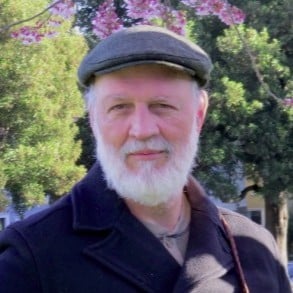
This interview is from a hot August Sonoma afternoon where I the privilege of chatting with the legendary fiddle and mandolin player Ed Neff.
DB: Tell us a little about your background?
EN: I was born in St. Louis and moved to Southern California where I finished high school in 1964. Then I moved to the Bay Area in 1967.
DB: Where did you start with the music?
EN: I started playing folk guitar in high school with my friends. I also played bass in the high school jazz band and flute in the concert band.
DB: That was the beginnings of the bluegrass scene down there wasn’t it?
EN: Yea, I was around a lot of other beginning players like Dave Dickey, founder of Lost Highway, and I heard the Dillards, which is when I realized that this is what I really wanted to do.
DB: So what came next?
EN: We saw the New Lost City Ramblers who were playing old time music, so we started a little band down there. My wife Brijet had a ¾ quarter size fiddle, and one of the guys had an old bowlback mandolin he got from a junk store. The neck was broken and he glued it back on. I glued a piece of tin can on it to make the 12th fret, so I played that for a while.
DB: Is that when you started playing mandolin?
EN: Yes. I was lucky to borrow a Gibson, as there weren’t that many inexpensive mandolins to choose from back then. In those days it was either a Harmony or a Gibson. Nowadays you can get an import for less than $1000 and it sounds decent if it’s set up right. Back then we didn’t really know much about set up. I realized later you could lower the action if it had an adjustable neck.
DB: Did you have any other mandolins?
EN: Another friend lent me his Gibson F12 mandolin when he went into the service. It was just a real booger to play with real high action. We found out that Monroe had his action real high, so of course we all emulated him to make ours that way too. I owned a few mandolins, including a Gibson F4, and I eventually bought this Nugget #1 in 1974.
DB: What made you decide to move to Northern California?
EN: I was in junior college but it wasn’t my thing. I’m not really a book learner and prefer to find my own way. I was gonna be a music major and they were teaching classical theory, but it became irrelevant for me when we got to 9th chords and such. Meanwhile I was banging out bluegrass and old time with my friends. Bruce Nimerov, an early banjo player with High Country, said “why don’t you move to the Bay Area and you can stay at my place.” So I moved up and we got a little band together.
DB: Where did you land?
EN: I lived in Berkeley for a few years and married my wife Brijet in 1967. I worked at the SP Railroad for a while in the yard office; they wouldn’t let me out in the yard because my eyes were too bad. I probably would have been there forever, given the job security, but I wanted to go to a festival with some friends in Reedsville NC. I asked for a leave of absence but they said no, so I said see you later. I would have made more money had I stayed but would not have played as much music.
DB: How was the festival scene back east?
EN: Great. Carlton Haney had what he called the “Bluegrass Story” in which Monroe featured former bluegrass boys such as Clyde Moody, Don Reno, Mac Wiseman, and others, so we got to hear the music live that we’d been listening to on records.
DB: Did you see much of Vern and Ray when they were together?
EN: I only saw them at a reunion show in 1968, at San Francisco State. They’d parted ways somewhere around ’66, so I missed them when I moved up in ‘67.
DB: How did you meet Vern?
EN: He was just around and had gone through a couple of iterations with his band. I ended up jamming with him a bit. Laurie Lewis and others had played fiddle with him. After I played a few jobs with him, he started calling me and I ended up playing with him for 15 years or so until he retired.
DB: When was that?
EN: 1976. I was in a couple of other bands at that time too; Done Gone was happening. There weren’t a lot of fiddle players out here then. There was Paul Shelasky, Laurie Lewis, and me and some others coming up, so we got most of the fiddle work in the area. I also played some down on the Peninsula and Santa Cruz area with the Bear Creek Boys.
DB: Where all did you play with Vern?
EN: There wasn’t really much club work with Vern, I think he only played Paul’s Saloon once or twice even though that was going on 7 nights a week. It was mostly concerts and occasional short tours through the northwest playing places like Arcada, Eugene, Corvallis, Portland, and up to Seattle. One time we went up to Vancouver and that’s where that live cut came from that Tom Diamant put on an Arhoolie Records release 4 or 5 years ago. We also played the Darington Festival in Washington. We never toured back east. He had a day job and couldn’t get the time off.
DB: Did you sing in Vern’s Band?
EN: Very little, I sang lead on the chorus of Toy Heart and a few others. Vern would sing lead on the verse and skip up to the tenor on the chorus like Monroe did. He asked if I wanted to sing more but I felt I couldn’t match their volume. The songs I did sing on I really had to belt them out, as loud as I could just to match his tenor.
DB: Did you all play much original material?
EN: Not much, some things like Cabin on the Mountain and Thinking of Home. Vern really liked the Lilly Brothers but also lots of the Carter Family, Flatt And Scruggs, Monroe and Stanley Brothers, and other songs he heard his mother sing growing up.
DB: What do you recall about recording sessions with Vern Williams?
EN: There was the Vern Williams Band recording in 1980 called “Bluegrass from the Gold Country” that was recorded at Archer Street studios in Berkeley. There were two sessions released on Rounder, one from 1980 and the second from 1981. We did the whole thing in four days, just standing in a circle playing, no overdubs or anything. We’d do a few takes and move on. There were lots of extra cuts that Vern and Rounder founder Ken Irwin put on the CD that was released in the ‘90s.
DB: Tell us about when you got into Bill Monroe?
EN: My friend Dave Dickey suggested that I go see Monroe live in 1966. After that I acquired a lot of tapes from friends recorded back east at Bean Blossom and other bluegrass parks. He was with various players, but that’s where I really learned all those tunes from, all of the breaks and parts. I’d slow them down and try to learn every note.
DB: Did you ever meet or play with Monroe?
EN: Dick Tyner put on a festival called the Golden West Bluegrass Music Festival in Norco, California in Riverside County. Dick really liked the hard-core stuff and wasn’t into any of the folks like Sam Bush who were starting to dabble in progressive stuff. He loved Vern, so we played down there pretty much every year. I met Bill there and he did this thing where he liked to get all of the fiddle players up on stage to play on one number. A dozen or so fiddlers and we played Down Yonder or Sally Goodin and each person would get a break. I remember right before it was my turn he leaned over and said “What’s your name” so I said Ed Neff and he says to the crowd “and here’s Ed Neff, lets listen to him.” So I did my bit. He let us play as long as we wanted.
DB: Did you ever try to play in his band?
EN: I had a chance to play with him years later on fiddle. I always felt I was in training to do that by learning the fiddle breaks on his material but it seemed a bit too overwhelming. I would have had to relocate back east, shave my mustache, and I couldn’t wear my glasses on stage. At that point, I was terribly myopic so it just wasn’t right. I guess I kind of regretted it a little bit later on but not that much.
DB: Were there certain periods of Monroe’s playing that you really locked into?
EN: Every period of Monroe playing has good stuff here and there. Of course the real early stuff with his brother Charlie was interesting; he was more of a crooner back in the early days. Later in the 1940s he had Sally Ann Forester on accordion and Stringbean (David Akeman) on banjo. He was starting to sing higher.
Then when he got Flatt and Scruggs, that was known as the first bluegrass recordings. Of course the Scruggs banjo style had a huge influence on that sound. They said the first time they played the Opry with Scruggs, people were literally falling off the edge of their seats. They just couldn’t believe Earl’s playing.
DB: What about the later years?
EN: There was some great classic stuff in the early ‘50s when he had Jimmy Martin with him and Vassar on fiddle. The banjo players weren’t always as good as Earl, but he wrote so many great songs on that High Lonesome Sound album like Memories of You and he had some great duets with Jimmy.
The ‘60s were interesting as well. Del McCoury recorded a few numbers with him. Frank Buchanan and others sang some good duets in that period and they matched up real good. His last several years in the ‘70s and ‘80s, he didn’t have such great bands but it was always interesting.
His producers had him try electric guitar and even organ on some of the gospels in the ‘60s, which was pretty good. They were trying to cross over some but it really just didn’t work very well. Bill was still singing good and playing the fire out of the mandolin.
DB: When do you first recall seeing Monroe play live?
EN: I first saw him in ‘66 at Ash Grove, and that was one of his last great bands – with Pete Rowan and Lamar Greer. They sang Walls of Time and Crossing the Cumberlands. Pete got Richard Green in the band for a while on the Blue Grass Time album, which was a good recording.
DB: Do you go exclusively for that pure Monroe mandolin sound?
EN: I used to really try and emulate his playing a lot, like Mike Compton and Butch Waller, who know that style inside and out. I was a more faithful Monroe player than I am now. Over the last 20 years, other stuff like fiddle licks and banjo stuff have crept in to my mandolin playing. In my head it’s a constant battle of whether or not what I’m doing is really good or does it really fit. I continually try to rework things and keep bluegrass in it, but for better or worse this other stuff is just kind of coming out of me.
DB: How would you describe Vern’s style?
EN: Vern wasn’t a flashy showman but had a good a stage presence and would introduce songs that would connect with the audience. His playing was very simple; he focused a lot more on the singing. His mandolin playing was very straightforward and just played the melody, which was perfect for what he was doing. He was really a cross between Monroe with some of the sophistication of his singing and the Stanley Brothers. He really loved that old mountain sound. I asked him once who he liked best, and he said, “I think I like the Stanley Brothers the best.”
DB: Talk more about Monroe’s sophisticated singing.
EN: It was also very straightforward and heartfelt with great control and great phrasing. There are great lessons to be learned on how to sing and the way he phrased things naturally. He had a very forward way of singing that moved the songs along. Not flat on the beat, not really ahead of the beat but the way he phrased it might start just a little before the beat, just pulling things forward.
DB: Was that much different from Vern’s singing?
EN: Every song Vern sang was from the heart. Nothing halfway about it; if he sang a song, he was dedicated to it, so those were great lessons for me to get to back him up.
DB: How do you think Monroe’s singing was different from his mandolin playing?
EN: Well, his bluesy mandolin stuff was very syncopated, so not really impacted by his vocals. His singing voice changed a bit after he left his brother. He purposely tuned things higher to take advantage of his good high voice. He wanted to give it that edge by playing in B and E, which the old time people never did.
Monroe’s playing was real simple. I’ve referred to it in the past as impressionistic; he gets right down to what the tune is about. A lot of tunes like Jerusalem Ridge – Kenny filled it out so he made it more sophisticated. Monroe would leave out a lot of the tune. He was sophisticated in his own way but with color, slides, and slurry things – really just trying to make the mandolin sound like a fiddle.
DB: Tell us about your band Blue and Lonesome.
EN: It’s really just a bunch of old friends. I’ve been playing with Larry Cohea since ‘73. He was new to San Francisco, and Butch Waller asked him to play the bass in his band. Larry said he didn’t know how to play bass, so Butch says, “we’ll teach you.” Then Bruce the banjo player moved back east so Larry took over the banjo. I’ve known Paul Shelasky since the early ‘70s when he used to sneak into Paul’s Saloon to hear bluegrass before he was old enough to get in. Later, I met Mike Wilhoyte playing with a band called Roanoke. Mike’s wife Karen has just recently joined the band on bass.
DB: What kind of bass playing do you like?
EN: Very simple, very few runs, and not too many lead-in notes. Banjo and fiddle are liable to be playing those anyway. I like it simple, maybe double up on the ones a lot. I like it when the bass player plays in the low register, not on the G string when we’re singing in B or Bb. The guitar is usually capoed up and the fiddle is high, so the bass is the only one with the fat low notes and it’s great to hear that B note down on the A string. The bass is sort of like drums; if you don’t notice them then they’re doing a good job. It’s not easy to do that for many reasons. I hate it when people say, “I just play the bass” cause it is real important.
DB: I see you have two blue chip picks on your Nugget mandolin there.
EN: In dry weather, I usually play the 50 but when there’s higher humidity I play the 40. I like the 50 for guitar.
DB: Tell us about playing with Del McCoury and his family.
EN: I met Del through Sandy Rothman at the Grass Valley festival and remember helping Ronnie a little bit when he was about 15 years old. The first time I played with him was over in Japan. I was doing a recording and my friend told me Del’s playing a concert. We went down to see him and Del asked me if I brought my fiddle and I said no. He asked us to come back the next night and bring it so we could do some twin fiddles with Warren Blair who was filling in on that tour. We hooked up a few times after that at Grass Valley and other venues where Ronnie asked me to play some twin fiddles with Jason on some classics like Panhandle Country or Georgia Rose. They’re the sweetest guys in the world and of course wonderful players.
DB: Do you prefer a more or less polished sound?
EN: I call it putting the hammer down. I don’t go for that smooth Virginia sound. That’s why I liked Vern; the music has got a little bit more edge, a take no prisoners approach.
DB: Thanks so much Ed, this has been a treat.
EN: You’re welcome.
Ed’s chronology of Bluegrass bands
Atomic String Ratchet String Band 1966 So Cal
Styx River Ferry Bob and Ingrid Fowler 1968–69
High Country 1969–76
Vern Williams Band 1976–2006
Rose Maddox
Done Gone
High & Lonesome
Roanoke 1990s
Lone Prairie 1990s–2009
True Blue 1996
Blue & Lonesome 1998 until present
Visit edneff.com for a more complete discography.