
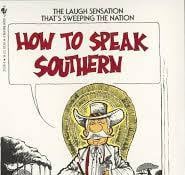
With the new year having arrived, I have been seeing a lot of ads on social media for language lessons like Babbel. I guess it’s New Year’s resolution time and vows like getting more exercise, losing weight or learning a new language seem to be very popular. The popularity always wanes though when people naturally revert to their less than laudable regular habits and life goes on as usual until the next year’s renewed dreams of a better life.
I checked the Babbel web site and discovered that they teach thirteen foreign languages. Indonesian is there but neither Chinese nor Japanese. Southern cannot be found, perhaps because it is technically not a foreign language for those of us here in the U.S. but more of a regional dialect. Gulla is another regional American dialect that is still spoken in my home state of South Carolina. It is a patois of English with West African dialects preserved by slaves in the off shore islands.
Babbel, if you want to teach Southern I will gladly be a highly paid consultant because I grew up on it and therefore consider myself a native speaker.
This particular dialect is important to bluegrass fans everywhere. I have attended music camps where topics were presented about whether or not to attempt an unfamiliar southern accent in your singing, simply because bluegrass music is so firmly rooted in the southeast.
Southern speech is not easy to learn. Both my parents-in-law were born in China. English was not their native language but when I spoke with them on the telephone I could understand their conversation pretty well. But when my wife, who was born in the U.S., picked up the phone with my brother on the other end she couldn’t get through the drawl to understand plain English (well admittedly not all that plain) and would hand the phone to me in frustration.
So here are a few pointers to those of you who would like to learn a little Southern before the course comes out online.
#1) Take your time. Southern cannot be rushed. In fact a proper Southern drawl often turns one syllable words into two syllables. For example “there” becomes “thay-er” and “bridge” becomes “bri-yudge”.
#2) Use the word “y’all” a lot. In some situations you might even expand that to include a larger group of people (folks actually) and go with “All y’all”. Anyway this is an essential Southern expression and many non-southerners I have met can’t do without it once they have learned of its usefulness.
#3) if you get lost in a conversation with a southerner going on and on about stuff that sounds interesting but you can’t really understand, remember this way to fake it. After each comment you must use an expletive but remember you have to take your time. So “she-yut!” and “day-yum!” with a nod of the head will save you any embarrassment about not being truly fluent in the dialect.
#4) If you happen to have grown up in Brooklyn or any of those regional dialect areas like Long Island near New York you have an advantage. When you need to say the word “oil” in Southern, just say “all” in your regional dialect and it will be perfect.
Maybe that will at least get you started. Southern is not easy but if you love bluegrass you have enough of a head start to cover your next trip to the heartland of the music. But be sure to take along my new phrase book (in progress and coming to a book store near you for $19.95.)
This marks my 400th article for the welcome column (well some of them have been reprints so I kind of cheated). But I want all of you to know how much I appreciate the positive (and even negative but constructive) comments over the years about my work. I would like to thank my old friend Rick Cornish for getting me embroiled in this constant struggle to generate new content. So much fun it has been.
if you would like to write for the web site drop me a line.
