
About sixty years ago on July 25th,1965 Bob Dylan created a firestorm at the Newport Folk Festival. He introduced electric guitars to the music set and many people didn’t like it at all. Well Dylan survived the criticism about the changes in his musical direction over the years, including the back to Jesus period, and now he is honored for a very eclectic body of work. He was even awarded a Nobel Prize in Literature.
Folk music is very traditional music and so is bluegrass. One rarely sees a non-acoustic instrument on the bluegrass stage. It’s almost always the holy quintet of banjo, bass, fiddle, guitar and mandolin, plus or minus Dobro. But bluegrass music can certainly be amplified to good effect depending on your point of view.
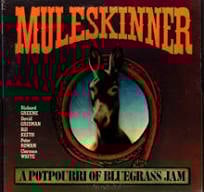
In the mid sixties the band Muleskinner experimented with an electrified sound. That band was a supergroup of great bluegrass musicians including Clarence White on guitar, Richard Greene on fiddle, David Grisman on mandolin, Bill Keith on banjo, Peter Rowan on guitar, John Kahn on bass and John Guerin on drums no less.. Most of that lineup had solid bluegrass credo because they had played with the father of bluegrass music himself, Bill Monroe.
Ask yourself “What is the bluegrass sound?” Every bluegrass fan probably has a slightly different answer. When Earl Scruggs left the Bluegrass Boys to form Flatt and Scruggs and Josh Graves added a Dobro element was that still bluegrass? Earl left the group in the late sixties and played with his son playing drums no less as the Earl Scruggs Revue.
In the early seventies a band called The Newgrass Revival sparked a sensation in the bluegrass world. They had long hair. They didn’t wear suits. And they played Jerry Lee Lewis, Beatles and Bob Marley tunes. But with musicians well schooled in bluegrass like Sam Bush and Bela Fleck they made it work. They also electrified their instruments at times.
Hot Rize is one of my favorite bluegrass bands of all time. Their sound is pretty traditional but I’ll never forget when I heard Pete Wernick run his banjo through an electronic phase shifter. It sounded great! Others like Billy Strings for example have imitated that trick.
https://youtu.be/POHk_bQ_9Wc?si=9LmlyyIJ8ljb2VRG
(Pete Wernick, Dr. Banjo) “I first got a phase shifter in 1974. When I heard an electric guitar through a phase shifter, I just figured I’d like to hear a banjo through it. I went to 48th St. in New York, into the different music stores, using a pick-up on my banjo, which I normally don’t use. (Editor’s joke note: Q: What’s the best pickup on a banjo? A: the Ford F 150). I tried a lot of our modern gadgets which give us our rock’n’roll sounds of today. I picked out an MXR Phase 90 and also a thing called a Mutron III, which I later got rid of’. He also used the phase shifter when he was with Country Cooking and his band mate Nick Forester played electric bass on occasion.
Bluegrass music doesn’t need fancy electronic tricks to make it meaningful. Bluegrass songs tell stories. Fiddle tunes played fast please crowds. The sound of an acoustic instrument played well speaks for itself.
Bluegrass music continues to evolve. It will not be subsumed by other genres like the closely related “roots music” but maybe it will be reinvigorated by outside influences just as it has been by its folk, country, old time and blues roots.
