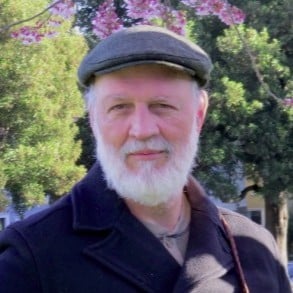
Ryan Paisley is the 16-year-old son of Danny Paisley and fine young next generation mandolin player for Danny Paisley and the Southern Grass.
DB: Hello Ryan, thanks for your time. Where do you call home?
RP: A small town in Chester County Pennsylvania about 50 miles west of Philadelphia.
DB: What instruments do you play in the band?
RP: I play the mandolin, bass, guitar, and banjo, and I learned saxophone in the school band. I played jazz bass when I was in the public school band. I went into it thinking there would be a lot of similarities with bluegrass, but it was a whole other mind set.
DB: What do you play in the band?
RP: Strictly the mandolin with the band.
DB: Have you played the CBA Father’s Day Festival before?
RP: Yes, a long time ago. I think it was three or four years ago, around 2012.
DB: Were you touring regularly with your father’s band then?
RP: I was still in my early stages of learning at that time. I tried to go on the road with them most of the time, but occasionally I wouldn’t get to go.
DB: So you’re full time with the band now?
RP: Yes. I’ve been full time for the past couple of years.
DB: How do you manage school while being full-time in the band?
RP: I was in public school but started home schooling this year in a program run through Liberty University. They have an online home schooling high school that I expect to graduate from in 2018.
DB: You all just played in California didn’t you?
RP: Yes. We were out in the San Francisco area in February and played in Mountain View and I think San Rafael. We were out there for about five days and it was really nice.
DB: How do you find California bluegrass styles compared to the East Coast?
RP: It’s actually a pretty big difference. A lot of people in our area are really hard-core traditional fans. You don’t necessarily see a lot of progressive or new styles unless you venture down to Washington D.C. In D.C. you’ll see a very modern crowd. In California you see a lot of diversity where a lot of people love all of the styles, which I do too.
DB: What about the people?
RP: The people I’ve met while playing in California are real nice; it’s a fun place to be.
DB: Do you like other styles of music?
RP: I enjoy all kinds of music, a lot of country or old country. I like a lot of music.
DB: What about non-country, jazz or current?
RP: No not really, I just don’t think about it or have the time. I tend to spend my time listening to a song I’m going to start playing. I do like swing music; that stuff is great.
DB: Do you remember your first instrument?
RP: The first instrument I ever got was a cardboard fiddle. It had no strings and it really didn’t even have a bow. I kind of just took a stick and used that as a bow. I think my grandmother found it in the shed somewhere and said “here.” When it broke my grandmother gave me an old rolling pin that I used as a fiddle. It seems crazy now but it made sense back then.
DB: No kidding. How did you get any sound out of either one of those?
RP: Oh I didn’t. It was just wood against wood for a while, and then an uncle had a Johnson mandolin that he never used, so he said just take it and that was kind of it. I messed around with that and fell in love with the mandolin.
DB: So that’s how you got hooked?
RP: Yes. Sometimes when I was really little on very rare occasions I would get to go with my dad when they played in the area. One night I was sitting there, and the mandolin player in the band at that time was Donnie Eldreth, and I remember thinking man, check that sound out, and that was it. I was hooked on the mandolin after that.
DB: Did you move on from that Johnson pretty quickly?
RP: I messed around with that mandolin for a while, but I remember the first time my mom said I could go out on the road with dad. We went to Bean Blossom and I remember going and just being in awe. We walked into the music tent because I just loved playing all kinds of different instruments, and there was a Bill Monroe A-style mandolin from Morgan Monroe Instruments. It was like $100 or so, and I asked dad, can you buy that for me? He said sure but you don’t get an allowance for a couple of months, which was fine by me. I played that instrument forever until the neck actually fell off of it. Dad tried to glue it back on, but I had played it every day for years and years.
DB: What type of instrument do you play now?
RP: I play an unusual solid black Kentucky mandolin I got through an endorsement through Saga Music and David Gartland. It has a really interesting sound that I really like.
DB: Was your grandfather playing in the band then?
RP: No. This was in 2009 and he passed away in 2004. I don’t really have a lot of memories of him, but one that sticks out was at Christmas time one year when they were visiting. I was playing some air guitar, and there was a little broom sitting there and my grandfather got up and started playing it like a guitar with me. He’d say no, you gotta strum it like this.
DB: I’m sure you know that’s a special heritage you have. How does that make you feel being a third generation professional player?
RP: It’s really great, and I’m very happy and honored that I get to be a part of that. Whenever we go somewhere we have a lot of people come backstage and say things like oh, “I remember when your dad was just a kid and I saw him just beginning to play” or “me and your grandfather used to talk all the time”. I just love hearing that stuff.
DB: I know you’re still young, but do you ever think about your goals in music?
RP: I just love playing and that’s what I want to do but also pursue other things like the business side of it.
DB: Do you mean like producing and promoting?
RS: Yea, I just like learning more about managing and promoting and also the technical engineering side. I like all of it.
DB: Well you have a really good disposition and outgoing personality, so I’m sure you could succeed if you decide to do that.
RS: Oh, why thank you.
DB: Do you all do any original material?
RS: We’ll play a song that a songwriter submits if we like it. We do a lot of songs that my grandfather sang and recorded, songs that are original to the Galax area of Virginia. My dad and grandmother came up here from Ash County, North Carolina and he started playing with a guy named Ted Lundy who was from Galax. Ted played a really original Galax sound, and that’s what made our sound in a way.
DB: What songwriters do you all record?
RS: One person who writes a lot of songs we really like is Chris Stuart, who’s from California. We’ve recorded two or three of his songs. Also we do some by Mike O’Reilly, who I think is from Canada.
DB: Do you write any songs or tunes?
RS: I mess around with instrumentals every now and then and have a couple of ideas I’m working on that just popped into my mind the other day, but I haven’t played anything out on stage. I don’t sing, so I leave that to the others.
DB: What’s your approach to learning a new tune?
RP: I try to break it down, like the first section and take it in parts. Be sure to learn just the basic level and actual melody. Once you have the melody of all the parts, then try to add in other things where they fit. I don’t try to go above and beyond or overstep my boundaries. Dad always says slow it down, don’t play it like that.
DB: Do you have any interesting stories from being on the road?
RP: Well Bill Monroe and Ronnie McCoury were always my big heroes. We got invited to play at the Library of Congress for a book project called Ola Belle Reed and the Southern Mountain Music on the Mason Dixon Line. She was a pretty famous folk legend from the area who also migrated up from the North Carolina area. We played, and then afterwards there was a symposium about her with people that knew her like my dad, her son David Reed, Del, Rob and Ronnie McCoury and others.
DB: Did you get a chance to talk with Ronnie?
RP: Yes, afterwards he asked if he could play my mandolin, and I said sure. Then he sat me down and gave me a little lesson. That was the coolest thing, that my hero would take the time to give me a lesson.
DB: Very cool, it sounds like you are having a lot of fun.
RP: Definitely, another great story occurred recently when we went to Minnesota for a festival and we were sitting around at the show in the room they gave us. Someone came in and told us we had to leave because the room was reserved for the band. So we said ok, we’re sorry, and then as were leaving another staff person said who’s playing tonight anyway, and they said Danny Paisley and the Southern Grass, to which we said, oh that’s who we are. Of course, they were very apologetic, but that was really funny.
DB: Were you ever able to make it to the Mandolin Symposium put on in California by David Grisman and Mike Marshall?
RP: No, I’ve heard a lot of great things about it but have never been able to make it.
DB: Do you ever give any lessons?
RP: No. That’s something I might get into once I get good enough. I don’t feel I would be good enough to do that right now.
DB: Well from what I hear, you’re pretty good.
RP: I don’t think so, but I’m pretty hard on myself and don’t ever want to ever get too over confident.
DB: Do you have anything else you want to say or plug or talk about upcoming tours?
RP: No, not really, but I’m really looking forward to playing the CBA Father’s Day Festival. I always love it out there; it’s one of my favorite festivals. It’s such a beautiful location with those big tall trees, and everyone is so nice. People like you and the staff are always great and very accommodating.
DB: Well thank you Ryan. We’re all really proud of the CBA Father’s Days Festival. It’s the high point of the year for many of us, where we get to go pick some and hear great players like your father and yourself.
For more information on Ryan and Danny Paisley and the Southern Grass including biographies, discography and touring schedules, visit dannypaisley.com or their Facebook page at facebook.com/DannyPaisley