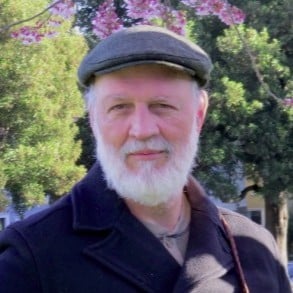
This month, we have Linda Maki who seems to pop up most everywhere in the San Francisco Bay area Bluegrass scene. Here is here bio: I was born in Berkeley and grew up in Northern and Southern California. I now live in Menlo Park. Both my parents were from Brooklyn, New York, and now my two grown sons live in Brooklyn. Go figure.
Dave: Tell us how you got into bluegrass?
Linda: I’m a relative newcomer to bluegrass. I got hooked when I saw O Brother Where Art Thou. Then I met someone who played the dobro at a party and went to the first Hardly Strictly and heard Dan Tyminski singing Man of Constant Sorrow with Jerry Douglas playing dobro.
Dave: What instruments do you play?
Linda: Guitar and bass.
Dave: What was your first instrument?
Linda: My brother got a guitar when I was 10 or so and lost interest. I picked it up and was hooked. I took a guitar class at the library in Claremont, California when I was 11.
Dave: Was your family musical?
Linda: My maternal grandfather, who died when I was two, was a ukulele-playing vaudeville singer and actor. My mom didn’t play and she sang off key, but she loved music. My father played violin and drums. I didn’t grow up with him but I visited him. The last few years of his life he started playing bluegrass fiddle and came to Grass Valley with me a couple of times. He was in heaven! It was so wonderful to see him have such fun and share that with him before he passed.
Dave: Who are some other musical influences?
Linda: I loved the Beatles, Joan Baez and Motown. I listened to the rock and roll stations and KDIA Lucky 13 in East Palo Alto. Nowadays, whenever I hear a singer I like, I try to steal as much as possible immediately. I’ll try it out and see if it works for me. I listen to the great flat-pickers such as Jim Nunally, Brian Sutton and Tim Stafford and wonder, how DO they DO that?
Dave: Do you do any composing?
Linda: I thought I would never write music because there’s so much good music out there to discover. But I was encouraged to write and have written several songs. I had adventures in Nashville trying to shop my song You’re on My Bad Side for Good.
Dave: Do you have a method for composing?
Linda: Generally it starts with one line that comes to me, and the song is built around that. For Grabtown Gulch, I researched some local history and came up with the song. It’s about a real logging town in the Santa Cruz mountains that’s long abandoned.
Dave: What bands do you play in?
Linda: Currently I play with the bluegrass band the Goat Hill Girls. I feel honored to play with such extremely talented women. We play the first Thursday at the Summit House in Los Gatos and at any other gig we can get. I’m also in a duo, Dusty Moon with Rick Merritt, where we work on those tight harmonies I love so well. I play a little banjo in that just for interest, such as on the Beatles song I Should Have Known Better. I don’t really know how to play banjo so I just finger pick it like a guitar. I also love to fill in with various bands whose regular bass or guitar players can’t make a gig. Lately I’ve filled in with Sidesaddle, Slide Road, Cabin Fever, the Black Eyed Susies and the Kentucky Twisters.
Dave: So you play some non-bluegrass material?
Linda: We play more eclectic stuff in Dusty Moon like a Monkees song. It’s really a Michael Nesmith song that they never got around to recording called Some of Shelly’s Blues. It’s been covered a lot, and I heard it from Tony Furtado. As for playing the banjo on the Beatles song I Should Have Known Better, it seemed like a natural fit, although I had to twist my partner’s arm to try it the first time. Now I’m really in trouble with the bluegrass police!
Dave: Do you have any upcoming recordings?
Linda: Dusty Moon has been working on a recording for … I don’t want to tell you how long. But we are nearing the end and hope to have the CD out in the next few months.
Dave: What interests you when you’re not playing music?
Linda: A walk in the redwoods or any natural place around here is something I really enjoy. What a natural wonderland we have in Northern California.
I also paint pictures of old trucks and such and pastries using discarded cookie sheets as my canvas.
Dave: You’ve had some recent public shows haven’t you?
Linda: I just had two paintings in the show “Delicious” at the Studio Gallery in San Francisco, my first real gallery. I won a first place for my painting Texaco Station, Driftwood Texas and a third place for Red Truck, Delta at the San Mateo County Fair this summer. My blue ribbon is hanging on my wall. I’m hoping to have paintings in the 2017 Silicon Valley Open Studios. You can see my art at lindamaki.wix.com/lindamakiart.
Dave: Do you have any teaching experiences you’d like to share?
Linda: I like a teacher to be really prepared and teach very practical stuff. Shout out to Kathy Barwick. I took some of her workshops and she’s a wonderful guitar teacher. Laurie Lewis really helped my singing by explaining about breath support. She suggested I take yoga to help learn this, and I’ve been taking yoga for ten years now.
My first flatpicking lesson was from Scott Huffman, who was then with Laurie Lewis and the Right Hands, on a bluegrass cruise in 2005. I’d been using a thumb pick, which he called “an itty bitty flat pick with a handle on it.” That eased the way. He taught me a lot in just 45 minutes.
Dave: Are there any upcoming shows you’re looking forward to?
Linda: I was sorry to miss Dolly Parton at Shoreline. She seems so genuine and open, and her voice is soulful. Her first priority is to bring enjoyment to the audience. Even though I’m late to country and bluegrass music in general, I’ve been drawn to Dolly’s singing since I was in my 20s.
There’s such great music around here. The Redwood Bluegrass Associates lineup looks really good this year, and I go to most of those shows. Don Quixote’s in Felton has some great acts in an intimate setting with good food. It’s actually a little easier to get to from my home on the Peninsula than the wonderful Freight and Salvage, especially on a weeknight. I’m sorry to see the end of the Woodshed series in the South Bay. Greg Newlon and Bev Barnett did such a good job with that; their hearts and souls have gone into bringing good music to this area.
Dave: What shows, events or venues are most memorable for you?
Linda: I loved the Espresso Garden in San Jose, the Fiddling Cricket series. That was when I was just getting into bluegrass, and I saw wonderful musicians such as Rob Ickes, Suzy and Eric Thompson, Orrin Star, and Laurie Lewis and Tom Rozum in a small and intimate setting. Of course nothing beats Grass Valley’s lineup. The Hardly Strictly lineup is like a dream, but it’s so crowded nobody goes there anymore, to quote the old joke. I know that’s not really true. It just has gotten that way for me lately.
Dave: You’re at a lot of Bay Area jams. Which are some of your favorites?
Linda: I like the RBA jams in Mountain View. They start before the concerts at 5:00 PM and are good fun. I like jamming at Grass Valley, although in the beginning it was nerve wracking. I love to jam with friends, but I also like to circulate and find new people to jam with. To me, that’s part of the fun of a festival. This past year I had an amazing time playing in jam with Greg Blake and Isaac Calendar of the band Jeff Scroggins and Colorado, as well as other top local pickers. I just stumbled onto that jam and played for three hours. Heaven!
Dave: Have you played CBA events?
Linda: I played on Vern’s stage with the first band I was in, South County Special. I’ve played at some of the very fun Sunday Streets events in San Francisco. Ted Kuster and Geoffrey Sargent have been working hard to promote bluegrass in San Francisco and the East Bay.
Dave: What about bluegrass really grabs you?
Linda: Tight harmonies and virtuoso musicianship. Also it’s a large but defined repertoire, so you can pick with bluegrass folks anywhere in the world.
Dave: What is your approach to bluegrass?
Linda: First and foremost, on bass, keep a steady tempo, no matter what. It can take a lot of concentration. If the rhythm in the group goes astray, I will try to bring it back by marching or stomping my foot., then add interest. You can walk the bass to help swing a song when appropriate and make it more fun and energetic. I try to make it interesting for myself by playing in different areas of the bass. Also, try new stuff all the time, but if you get too far afield or go off rhythm, it’s back to the good old 1 and 5. Lately I’ve had the opportunity to use a bow…what a sound! Love that. My goals are to learn to slap and take interesting solos.
Dave: Who are your favorite bass players?
Linda: Missy Raines, she moves and plays and it seems that she and the bass are melded together… she is soulful. Todd Phillips is masterful; I learned the basics of bass from his DVD. I watch, learn, and try to steal from the many great bass players that play around here.
Dave: Do have any personal tips and tricks for others?
Linda: Just keep at it. I’ve played bass weekly at a jam for about seven years and started out as a beginner on the bass. I try new things all the time and sometimes I fail but I learn stuff too. Play just a little each day. I say that, but I don’t do it as much as I should.
Dave: Tell us more about your singing?
Linda: Singing is my favorite thing. I can find harmonies pretty easily. This maybe started as a kid when most of the singers on the radio were male and I could sing along if I sang the harmony parts. I’m a harmony addict! Someone once asked me when I started singing, and I said, “huh?” I don’t ever remember NOT singing.
Dave: What musical challenges have you had to overcome?
Linda: Oh boy… It was SO hard to break into the bluegrass world, especially as a woman. This is changing, but bluegrass has been difficult for women to be accepted in. I think some people still don’t think we belong, but hooray for the Handsome Ladies. I wish they’d been around ten years ago. I started out so nervous. I didn’t know a single song from beginning to end at first. Joining a jam in the early days, my hands would sweat just driving there. I made myself little goals: Learn a song. Learn to use a pick. Learn to play bass just well enough to be invited into a band – it worked. Learn to sing without having coughing fits. Learn to take a good enough, then a good, then a great guitar break – I’m still working on that…forever. I was really hung up on the “rules “ of bluegrass at the beginning, and although I still follow the “10 Jammandments,” I find that the more I can relax and let myself shine through, the better I get.
Dave: Who are your favorite singers and why?
Linda: So many! Aretha Franklin is the gold standard for me. I think both bluegrass and soul music are rooted in gospel, especially the harmonies. Molly Tuttle and AJ Lee, beautiful harmonies. Dan Paisley, Tim O’Brien and dozens more I’m leaving out.
Dave: Do you have any favorite fiddle tunes?
Linda: Rebecca, New Camptown Races. As for other instrumentals, I am enjoying Mike Marshall’s choro music album that came out some years ago. You can’t listen to that music and not be in a good mood.
Dave: Tell us about the instruments that you play?
Linda: I have a Martin D-16 that I love. I bought it from Bill Dickson several years ago. He’s an instrumental guitar player from New York who now lives in La Honda. Andy Falco of the Infamous Stringdusters once played my guitar on one of Bill’s albums, so it’s been sanctified. Michael Lewis in Grass Valley set my guitar up a few years ago and I think it sounds really good.
As for my bass, I bought a new Shen bass from Steve Swan in 2008. He said it was the best new bluegrass bass out there at the time and I agree, even though it’s a Chinese plywood bass. Maybe one day I’ll switch to a vintage Kay if I can find one that sounds really good. I tend to run into things with my bass – it’s hard not to – so I don’t want to worry about damaging a really expensive bass.
Dave: Thanks so much, Linda.
Linda: Thank you, Dave. I’m honored.