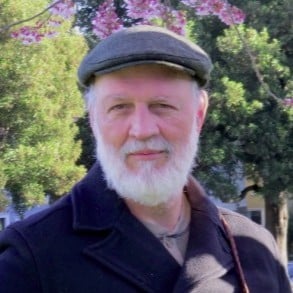
Katya Polovina
This month, we talk with Katya Polovina who is a Central Valley transplant to the San Francisco Bay Area. She has quickly made her mark playing stand-up bass for many influential local bands and by all accounts having a great time to boot.
db: Hi Katya. What is your musical background?
kp: I began singing in a church band with my father when I was 12 years old and I was immediately hooked. Later, I joined choirs and chamber groups in the Central Valley.
db: Where did you grow up?
kp: I was born in Donetsk, Ukraine. Our family moved to the Central Valley in 1997 and I grew up in Modesto. It’s very hot there in the summertime.
db: Where do you now call home?
kp: I currently live in San Francisco. The weather is great and there’s plenty of bluegrass to go around.
db: What instruments do you play?
kp: I play and study the upright bass. My bass instructor, Mandy Flowers, is magnificent. I’ve been taking lessons from her since October 2012. We‘ve established a friendship over the years and she’s helped me tremendously in developing my skills.
db: When did you first hear bluegrass music?
kp: The first time I heard bluegrass music, I was mesmerized. I heard Yoseff Tucker and Victor Skidanenko (along with others) and I remember thinking to myself how great it would be to play such fun music!!! So, I stole a crappy bass from my uncle and started following bluegrass people around. Eventually, I purchased my current bass.
db: Tell us about your first instrument.
kp: It was a flute—I don’t want to talk about it! I’m happy to tell you about my bass though. It’s a blonde 1937 Kay M-4, strung with Innovation brand strings to offer a warm, full tone. According to Roger Stowers there were only 150 of the M-4 blonde basses made and even fewer with the flower-engraved tuners. M-4 models carried inletted purfling and an ebony fingerboard and tailpiece. I purchased my bass from the Bass Monkey Workshop in Pennsylvania and I’ve been very happy with it.
db: How do you approach learning a new song?
kp: When learning a new song, I put it on replay in my car. I’ll write out the lyrics and spend time on it with my guitar. Eventually I take it to the Stork Club, and only after the Stork am I able to call it at a gig, ha!
db: Tell us about the bands you play in?
kp: My first bluegrass band was with the True Life Troubadours. Victor Skidanenko hired me to play in his newly formed band, where he played mandolin. Currently, I’m the permanent bass sub with the Mighty Crows. We play every fifth Tuesday at Sam’s BBQ in San Jose. Also, I’m a frequent guest with Ed Neff and Friends on Thursdays at the Willowbrook Ale House in Petaluma.
db: That’s a nice line-up of bands. What’s it like to step in as the newbie with bands that have been playing together for a long time?
kp: I’ve been very fortunate to play with the finest musicians. I’m grateful that the community has been welcoming and inclusive. I learn a lot by playing with musicians who’ve been playing together for a long time. I learn something from every gig.
db: Have you played any CBA events?
kp: I played Vern’s stage with the True Life Troubadours at the Fathers Day Festival in Grass Valley in 2015 and had a GREAT time! I recently played the main stage FDF at Grass Valley with Blue and Lonesome. I’ll never forget those wonderful moments.
db: You play at a lot of the Bay Area bluegrass jams. Do you have any favorite ones?
kp: I really like to play the Taco and the Lucky Horseshoe jams. Tom Lucas does a great job organizing those. Additionally, I frequently attend the Stork Club in Oakland. I get there late and I stay late. My favorite jams, however, are house jams. There’s nothing better than getting friends together and playing music in the living room or garage.
db: Do you prefer bands or smaller ensembles, duos, etc.?
kp: I like playing bass in a full band but prefer to sing in smaller arrangements, such as duos and trios.
db: Are you involved with the Handsome Ladies at all?
kp: My involvement with the Handsome Ladies is minimal. I’ve gone to a few jam sessions with my guitar and we did a lot of singing and harmonizing. It was fantastic.
db: Do you play any non-bluegrass or old-time music?
kp: No, but I will…once I’m good enough for swing.
db: What swing players catch your ear?
kp: Olli Soikkeli is a fantastic player. He plays gypsy jazz with his band Rhythm Future Quartet. They tour fairly often and visit California when DjangoFest is in season. Check them out; all of the players are most talented.
db: Do you play any old-time?
kp: No, I don’t play old-time. I tend to like singing songs better.
db: What bluegrass musicians do you listen to and love?
kp: I listen to Danny Paisley and the Southern Grass a lot. His singing is unreal. I was happy to hear them at Grass Valley this year.
db: Do you have any other favorite singers?
kp: Carter Stanley is fantastic.
db: What instrumental tunes do you like?
kp: I like to play fiddle, mandolin and banjo tunes: Billy in the Lowground, Wheel Hoss, Turkey in the Straw, June Apple, Ground Speed, Forked Deer…
db: What inspires you musically?
kp: Stories inspire me. My bass teacher often resorts to storytelling when she’s teaching me. She often speaks of Ray Brown and Charles Haden. It’s fascinating to hear about the personalities of such great masters. Ray would ask, “is this your bass?” when players missed the second octave G (thumb position) on the high G string. Ray’s reasoning was simple: if it’s your instrument, you should know it well.
db: Do you have any music students?
kp: I have a mini guitar student. Charlie is my six-year-old neighbor. He’s very smart and instantly stores information in his long-term memory. Playing is still not easy for him, albeit, we are making great progress. I would love to get a bass student. If anyone is interested, feel free to contact me.
db: Can you share some tips and tricks for players to continue to improve?
kp: Yes, never stop practicing! Purchase a metronome (no need to tell anyone you have one) and establish efficient practice habits in solitude. I’d be happy to share my regular bass exercises so people can feel free to ask me if they would like them.
db: What do you look for in a teacher?
kp: A passion for teaching is the best quality for a teacher!
db: Can you describe some musical challenges you have had and how you overcame them?
kp: It’s a challenge to learn an instrument as an adult. I wanted to play bass runs and interesting notes immediately! However, I decided to be gritty about it. Grit is the ability to attend to a task and stick to the long-term goal and it’s the greatest predictor of success. I practice at keeping good time and intermittently increase the complexity of my exercises. I’ll increase the tempo, listen for even volume across all strings, add accents, add notes, and so on. If I make mistakes, I simplify my exercises until time is reclaimed.
db: What interests you when you are not playing music?
kp: Time that is not consumed by work or bluegrass is typically spent with my family and friends. My best friend is not a musician, so we end up cooking and brewing tea together. Additionally, I enjoy reading on my cozy couch.
db: Do you have a day job?
kp: I’m a microbiologist and I work in the Department of Microbiology and Immunology at UC San Francisco. It’s been a pleasure to establish a positive relationship with an institution that is appreciative of my contributions. Microbiology is a fascinating field because it teaches us about the natural world. I especially enjoy working with the microbial diversity of the human gut.
db: Thanks so much for your time Katya
kp: It was fun answering those questions. Thank you for the opportunity.